KEY FACTS
| Service area | Gujarat (Ahmedabad, Vadodara, Surat, Rajkot and beyond), India, and Abroad |
| Specialisation | Green Building Design — passive-first, climate-responsive |
| Approach | Reduce energy dependency before specifying systems |
| Certification support | IGBC / LEED / GRIHA pathways (as applicable) |
| Contact | vna.works/contact |
Green Building Design in Gujarat
Green building design integrated at the first decision — passive-first strategies, climate logic calibrated for Gujarat, and measurable performance from concept through construction.
The most consequential green building decisions happen before construction begins — in the brief, the massing, the orientation, the envelope. VastuNirman Architects helps developers, institutions, and homeowners across Gujarat, India, and internationally integrate these decisions at the point where they still shape the outcome — so sustainability becomes a design advantage: lower operational load, better comfort, and measurable results.
1
Design decisions that reduce demand — before any system is specified
2
3
A building’s performance is set by its design decisions — not by the technology applied afterwards.
A building’s energy load is a physical consequence of its orientation, form, envelope, and internal gains. Technology can manage that load — it cannot undo it. The decisions that determine how much a building will consume are made at the design stage, before any system is specified. That is where VNA’s green building practice operates.
Many buildings become ‘green’ only in presentation — plants on balconies, a few efficient fixtures, and a label added late. The real gains come from early decisions: orientation, envelope, daylight, ventilation, heat gain control, water strategy, and right-sized systems.
Certification has value. We are not dismissing it. But there are two different problems in sustainable design, and they are often confused. The first: how much energy does this building demand?
That is a passive design problem — orientation, shading, mass, insulation, ventilation. You resolve it in the plan, in the section, before services enter the picture. The second: how efficiently do we manage what remains? That is where systems, ratings, and BMS come in. Skip the first and go straight to the second, and you are managing a building that was never designed to perform. That is not sustainability. It is damage control.
- Reduce energy load before adding expensive systems
- Improve thermal and visual comfort without over-reliance on mechanical cooling
- Make sustainability buildable, maintainable, and documentable
- Align the strategy to either performance goals or certification needs (if required)
Who This Is For
This green building design service is built for clients who want sustainable outcomes that actually hold up in execution. VNA has applied green building thinking across residential towers, industrial facilities, institutional campuses, and civic-scale projects throughout Gujarat, and India — where sustainability is a design discipline with measurable outcomes, not a feature list.
| Segment | Description |
|---|---|
| Developers | Residential, mixed-use, commercial projects |
| Corporate / Commercial Owners | Offices, retail, hospitality, industrial facilities |
| Institutions | Education, civic, public buildings |
| Premium Homeowners | Bungalows and residences with comfort priorities |
| Certification-Driven Projects | IGBC / LEED / GRIHA pathways (if required) |
| High Operational Cost Projects | Where energy/water performance directly impacts viability |
| Documentation-Sensitive Projects | Where approvals, audits, and compliance must be clean |
What typically goes wrong (and how we prevent it)
| Risk Tension | VNA Decision |
|---|---|
| Late “green add-ons” vs. early load reduction | Begin with passive-first strategies |
| Capex-heavy tech vs. measurable performance | Right-size systems after demand reduction |
| Daylight vs. glare/heat gain | Daylight strategy with shading and envelope control |
| Ventilation intent vs. noisy/dusty reality | Ventilation designed for local conditions |
| “Efficient glass” vs. overheating interiors | Envelope decisions driven by climate logic |
| Water-saving fixtures vs. whole water strategy | Harvesting, reuse, landscape water logic |
| Certification paperwork vs. integrated documentation | Plan documentation from the start |
| High-maintenance solutions vs. durability | Select strategies the facility team can sustain |
| Green claims vs. verifiable outcomes | Define targets and track assumptions |
| Coordination gaps vs. execution drift | Align architecture, structure, MEP early |
How we work
Stage 1: Sustainability Discovery (Goals + Constraints)
Purpose: Define what “green” means for your project—performance, comfort, cost, or certification.
- Project type + operating pattern clarified (hours, occupancy, equipment loads)
- Sustainability priorities agreed (energy, water, comfort, materials, certification)
- Baseline constraints noted (site, orientation, shading, utilities, approvals context)
- Preliminary performance targets drafted (qualitative + quantitative where possible)
Stage 2: Passive-First Strategy (Demand Reduction)
Purpose: Reduce heat gain and energy demand through architecture, not gadgets.
- Orientation + massing intent aligned to climate logic
- Daylight strategy set (with glare control intent)
- Envelope strategy direction (shading, openings, insulation approach)
- Natural ventilation feasibility assessed (where applicable)
Stage 3: Systems Strategy (Right-Sizing MEP)
Purpose: Align HVAC/lighting/water systems to reduced demand.
- HVAC approach direction + zoning logic (comfort + control)
- Lighting intent: layered + efficient + daylight-responsive approach
- Water strategy: harvesting/reuse/low-flow + landscape logic
- Measurement/controls intent defined (where relevant)
Stage 4: Documentation Pathway (If Certification is Needed)
Purpose: Keep compliance/certification requirements from becoming a late scramble.
- Certification pathway clarified (IGBC / LEED / GRIHA) if required
- Documentation roles defined (who produces what, when)
- Credit/criteria plan aligned to design decisions
- Submission readiness checkpoints mapped
Stage 5: Detailed Integration (Execution Reality Check)
Purpose: Ensure sustainability strategies survive details, contractors, and maintenance.
- Key details resolved (shading devices, waterproofing interfaces, envelope junctions)
- Material/finishes aligned to VOC/maintenance intent (where applicable)
- MEP coordination notes created to protect performance intent
- O&M practicality reviewed (what is easy to run and maintain)
Stage 6: Site Support & Performance Intent Protection
Purpose: Keep performance intent intact through real on-site decisions.
- Clarifications and RFI responses aligned to sustainability intent
- Substitutions evaluated for performance impact (as per scope)
- Documentation support for audits/submissions (if applicable)
What we optimise for (not just “being sustainable”)
Energy Load Reduction
Climate Responsiveness
Comfort You Can Feel
Water Resilience
Maintainability
Green Building Design — Featured Case Studies
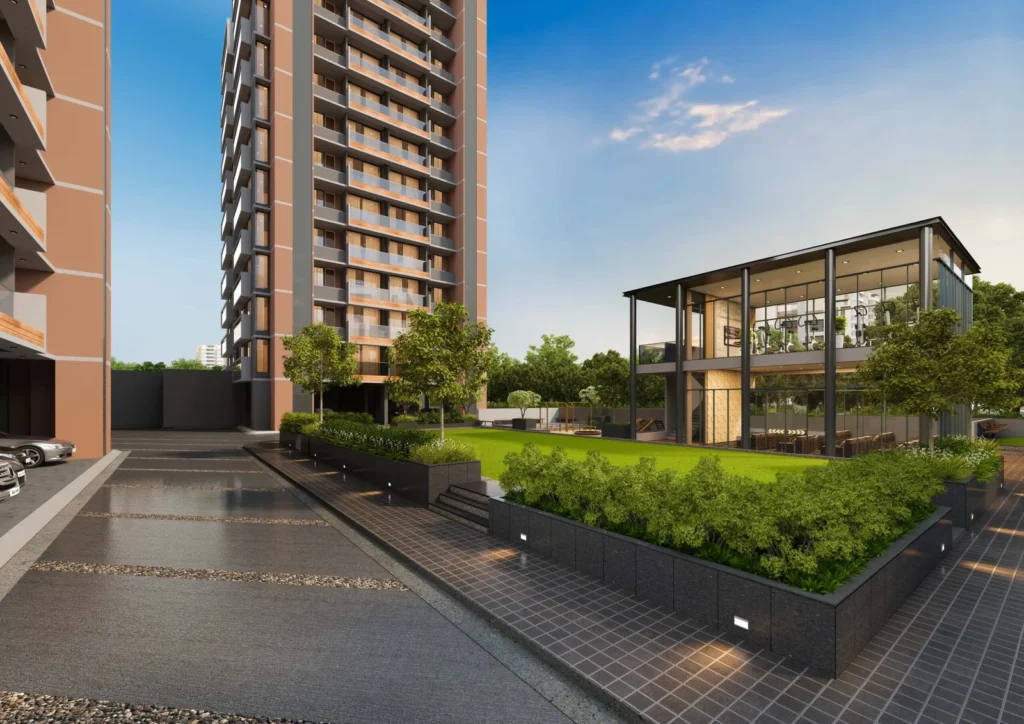
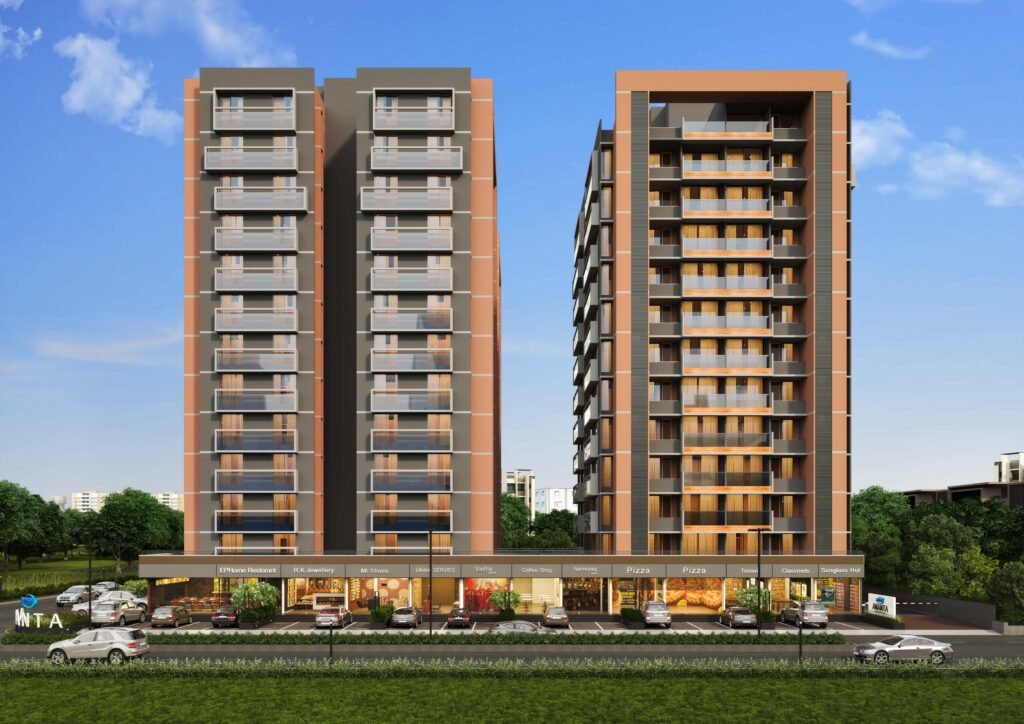
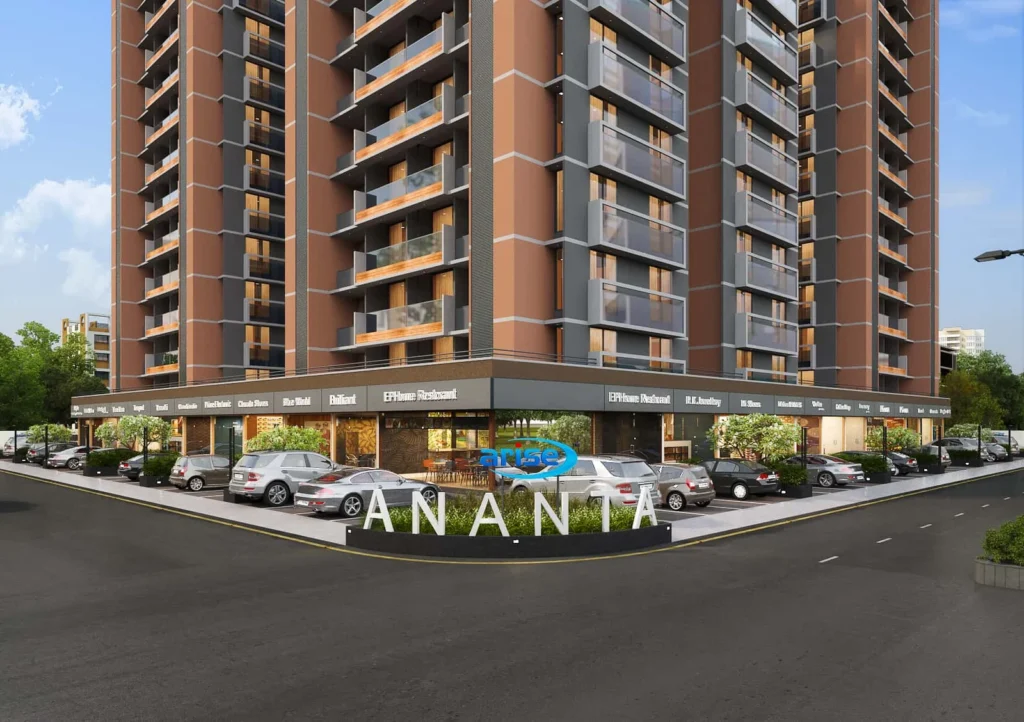
A high-rise residential tower in Ahmedabad’s composite climate, where occupant thermal comfort and long-term cooling cost needed to be resolved through design decisions, not mechanical compensation.
An industrial facility in Mehsana region where energy performance, natural ventilation, and operational cost needed to be integrated into a building type not typically associated with green design discipline.
Certification pathways (only if it’s truly needed)
Are you pursuing a label—or performance?
A certified building that performs poorly is a documentation exercise. A well-designed building that happens to qualify for certification is a better investment. We start from performance logic and document it rigorously — not the reverse.
Green building design and intelligent building systems are strongest together.
Passive-first design reduces the energy demand that intelligent building systems must manage. Smaller loads mean right-sized equipment, simpler controls, and lower operational cost across the building’s lifetime. If your project includes BMS, HVAC automation, or performance monitoring, early green building decisions directly reduce the complexity and cost of those systems.
If your primary question is about how your building’s systems will be controlled and monitored in operation, see our Intelligent Building Design service.
Frequently Asked Questions
Q: What’s the difference between “green building design” and “adding green features”?
Q: Do we need certification (IGBC/LEED/GRIHA) for a building to be sustainable?
Q: When should sustainability planning start?
Q: Will green design increase project cost?
A: Some strategies are cost-neutral, some add capex, and many reduce operating costs. The right approach is to evaluate capex vs. lifecycle value and prioritise what matters.
Q: What inputs do you need to begin?
Q: Do you run energy simulations?
Q: How do you ensure the sustainability intent survives construction?
Q: Does sustainability only mean energy savings?
Q: Can you combine green building strategy with intelligent building design?
Q: What makes VNA different from typical green building consultants in Gujarat?
A: Sustainability is a design logic — integrated at the orientation and envelope stage, coordinated through execution, and measurable in the building’s performance over time. The record is in completed buildings across Gujarat. Ask for it.
Q: Do you work across Gujarat or only in Ahmedabad?
Start with a sustainability feasibility check
What to share before the call
- Site plan / plot details + location
- Project type + approximate area + operating hours/occupancy
- Current goals (energy, comfort, water, certification mandate if any)
- Timeline expectations
- Budget band (even a range)
- Any reference projects (optional)