KEY FACTS
| Service | Intelligent Building Design (IBD) |
| Service area | Gujarat, India, and Abroad |
| Specialisation | Control logic, integration architecture, commissioning intent |
| Approach | Defined before procurement begins; vendor-agnostic; coordinated with architecture and MEP |
| Sectors | Commercial, Healthcare, Institutional, Industrial, High-Value Residential |
| Notable project | Gandhinagar Smart City ICCC |
| Contact | vna.works/contact |
Intelligent Building Design in Gujarat
Intelligent building systems fail when they are planned last. VNA helps developers, institutions, and commercial owners across Gujarat, India, and internationally define control strategy, integration logic, and commissioning intent early — at the same moment as spatial and MEP decisions — so the building performs in use, not just on launch day.
1
2
3
The first question we ask on any intelligent building brief is not what to install. It is what happens when the system fails — and who is responsible for the building on day 1000. That question shapes every decision that follows.
Most buildings perform at handover. The gap appears later — in year two, when system settings drift from design intent; in year five, when maintenance habits form around workarounds; in year ten, when a facility team inherits a building no one fully documented. Intelligent building design at VNA addresses this timeline explicitly: defining control logic, commissioning intent, and handover clarity before the first device is installed.
At VNA, intelligent building design is not a discipline layered onto architecture after the fact. It is an architectural decision — made at the same moment as spatial zoning, structural coordination, and envelope logic. The buildings that prove this are the ones that still work.
Intelligent building design is not a product category. It is a set of decisions about how a building behaves.
A smart building isn’t a showroom. It’s an operating system.
- Decide what not to automate: unnecessary complexity creates more failure points, not fewer
- Define the building's operational behaviour before selecting any device or system
- Define what matters most: comfort, uptime, energy control, security, or monitoring
- Design the system architecture (zoning, controls logic, integration) before devices are picked
- Coordinate early with MEP and architectural constraints (shafts, plant rooms, ceilings, access)
- Stay vendor-agnostic: specify outcomes and interfaces so you're not locked into one supplier
- Make it maintainable: clear documentation, commissioning intent, handover clarity
Who This Is For
Clients come to VNA for intelligent building design when the question is: how do we make sure this building actually works after handover — and keeps working? The answer starts with defining the control logic, integration architecture, and commissioning intent before procurement begins.
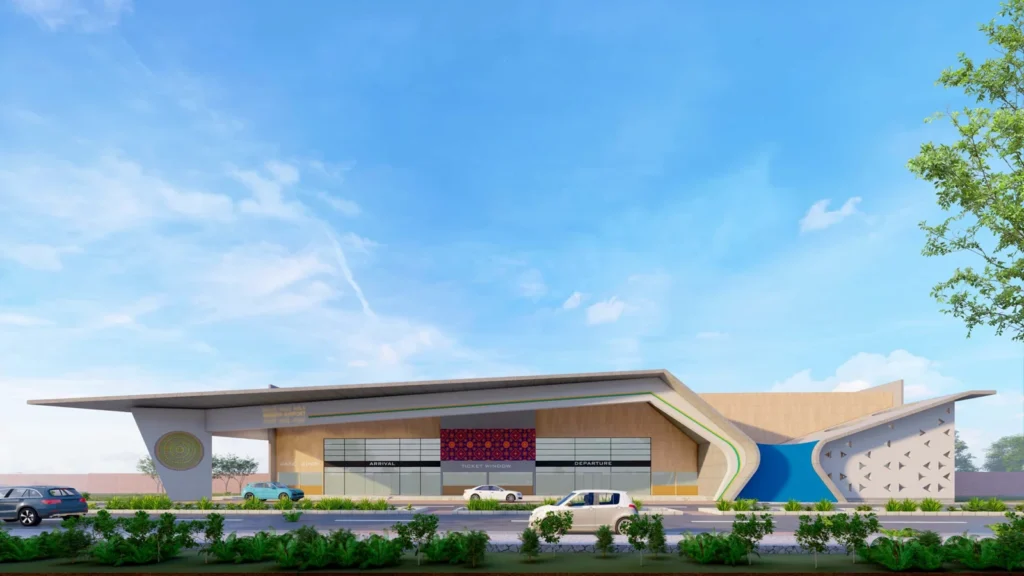
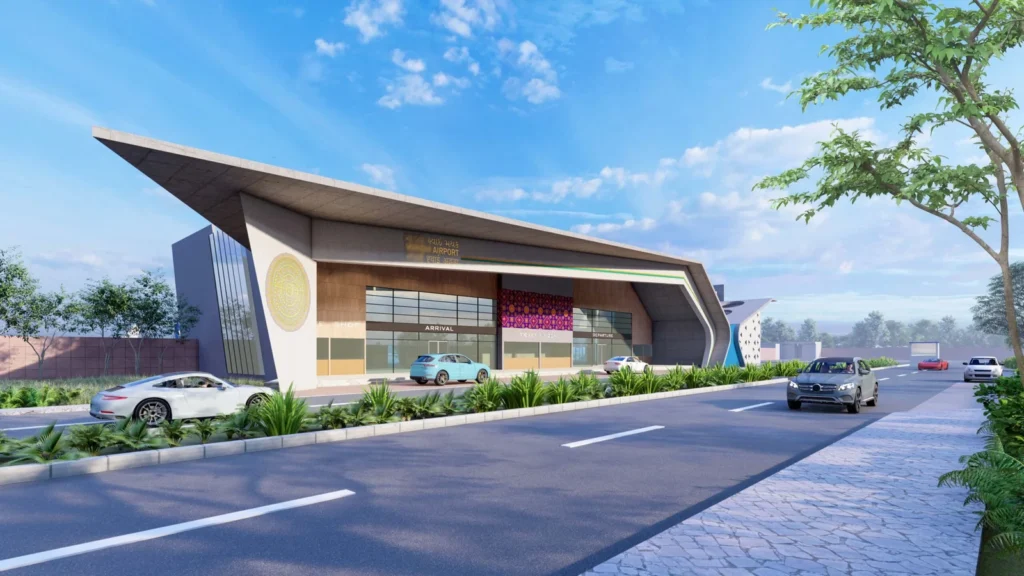
VNA has applied intelligent building thinking at institutional and civic infrastructure scale — including the Gandhinagar Smart City Command and Control Centre, airport terminal projects, and university campuses across Gujarat — where operational failure is not an option and design quality is a public commitment.
| Segment | Description |
|---|---|
| Commercial Owners / Corporate Campuses | Offices, HQs, IT parks, business parks |
| Hospitals / Healthcare Facilities | Uptime, safety, monitoring, controlled comfort |
| Institutions / Public Buildings | Multi-stakeholder operations, control rooms, security, maintenance clarity |
| Retail / Hospitality / High-Footfall Spaces | Comfort control, energy tracking, predictable operations |
| Industrial / Warehousing | Monitoring, safety systems, efficiency and uptime |
| High-Value Residential / Communities | Access control, comfort zoning, energy monitoring |
| Projects with Frequent Operational Breakdowns | Where the operations team is tired of 'smart that doesn't work' |
What typically goes wrong (and how we prevent it)
| Risk Tension | VNA Decision |
|---|---|
| Feature overload vs. operational clarity | Define outcomes + control philosophy first |
| Vendor lock-in vs. long-term flexibility | Specify interfaces, not brands |
| Smart controls vs. poor zoning | Zone by use patterns, not floor plans alone |
| Sensors everywhere vs. data you can’t use | Define data hierarchy and reporting intent |
| Centralised control vs. single point of failure | Plan redundancy where needed |
| Shiny dashboards vs. no commissioning | Design for testing, commissioning, and tuning |
| Complex systems vs. weak maintenance teams | Choose maintainable complexity |
| IT/network afterthought vs. unstable systems | Plan network logic early (with IT) |
| MEP not integrated vs. constant comfort complaints | Coordinate HVAC, lighting, controls properly |
| Security + access cobbled together vs. compliance risk | Unify critical systems architecture early |
How we work
Stage 1: Systems Discovery (Goals + Operations Reality)
Purpose: Define the operating outcomes and constraints before specifying technology.
- Project type + operating pattern clarified (hours, occupancy, critical zones)
- Priorities defined (comfort / uptime / security / energy / monitoring)
- Stakeholders mapped (owner, facility team, IT, security, consultants)
- Baseline constraints noted (plant rooms, shafts, ceilings, budgets, approvals context)
Stage 2: Controls + Zoning Strategy (The Intelligence Blueprint)
Purpose: Decide “how the building behaves” before choosing devices.
- Zoning logic set (by usage, loads, schedules, control needs)
- Controls philosophy defined (manual override, automation rules, schedules)
- Critical alarms/events identified (what must be monitored and escalated)
- Integration intent defined (HVAC, lighting, access, CCTV, fire interfaces as applicable)
Stage 3: Integration Architecture (MEP + IT Coordination)
Purpose: Prevent clashes and instability by coordinating early.
- MEP interfaces mapped (HVAC equipment points, sensors, actuators, meters)
- Network/IT requirements outlined (VLANs, cybersecurity basics, reliability intent)
- Space requirements confirmed (panels, racks, access for maintenance)
- User experience approach defined (operator screens, dashboards, role-based access)
Stage 4: Specification + Procurement Clarity (Vendor-Agnostic Where Possible)
Purpose: Write requirements that prevent lock-in and confusion.
- Performance and interoperability requirements documented
- Interface and handover requirements defined
- Commissioning scope and responsibilities clarified
- Procurement package structure mapped (who supplies what)
Stage 5: Commissioning Intent + Handover Plan
- Testing and commissioning plan outlined
- Acceptance criteria defined (what “works” means)
- As-built documentation checklist created
- Training/handover plan defined for facility teams
Stage 6: Site Support + Tuning (as per scope)
- RFIs resolved without breaking system intent
- Substitutions assessed for impact
- Early tuning recommendations captured (where included)
- Post-handover issues triaged with clarity (if scoped)
What we optimise for (not just “being smart”)
Reliability & Uptime
Comfort You Can Control
Not just temperature. Occupancy-aware schedules, lighting layers, and predictable user experience — designed so the facility team can operate the building, not just tolerate it.
Actionable Monitoring
Maintainability & Vendor Freedom
Intelligent systems work best when the building is designed to perform first.
Unlike green building design — which reduces a building’s energy demand through climate-responsive decisions at the design stage — intelligent building design addresses how that remaining energy is controlled, monitored, and sustained over the building’s operational life. One reduces the need. The other manages the reality.
The buildings that perform most reliably under intelligent control are the ones designed to perform passively first. A well-oriented, well-shaded, well-enveloped building gives intelligent systems a realistic baseline to manage — rather than asking automation to compensate for a building that runs hot, leaks air, and fights its own climate.
If your primary question is about passive performance, thermal comfort, and energy load before systems are specified, see our Green Building Design service.
For us, this is what ‘Beyond’ means in intelligent building design: not the dashboard at handover, but what holds at year five, year ten, year twenty.
Intelligent Building Design — Case Studies
Design Challenge: A civic-scale facility requiring the integration of multiple operational systems within a single architectural envelope — with the spatial hierarchy, material resolve, and technical coordination that a high-visibility government commission demands.
Key Decision: Design the building so that the architecture expresses the operational logic — control, coordination, and civic presence — rather than containing it inside a generic shell.
Outcome: A completed government facility at smart city scale where design quality and systems integration were delivered together, not traded against each other.
Key Decision: Lighting, HVAC, and energy monitoring were coordinated with the architectural layout during design, not added after, so the facility can be managed centrally rather than maintained manually zone by zone.
Outcome: A delivered government campus where the systems work as the building works — not around it.
Frequently Asked Questions
Q: What does “intelligent building design” actually include?
Q: Is this the same as BMS design?
Q: Do we need a “smart building” for every project?
Q: How do you avoid vendor lock-in?
Q: When should intelligent building planning start?
Q: Who needs to be involved from the client side?
Q: Do you handle cybersecurity?
Q: How do you ensure the system works after installation?
Q: Can intelligent building design reduce energy bills?
A: We often align intelligent systems with green building strategy — see our Green Building Design service for how passive-first decisions reduce the load that intelligent systems must manage.
Q: What makes VNA different from typical smart building vendors?
Q: Do you work across Gujarat or only in Ahmedabad?
A: We work across Gujarat — including Ahmedabad, Vadodara, Surat, Rajkot, and major institutional and smart city projects such as the Gandhinagar Smart City ICCC. We also take on international projects. VNA has provided design services for projects in Australia. For international enquiries, please contact us directly to discuss scope and coordination.
Q: Can intelligent building design be added to an existing building?
Start with a systems discovery call
What to share before the call
- Project type + approximate area + operating hours
- Current priorities (comfort / energy / security / uptime / monitoring)
- Plans (if available) or basic zoning information
- Any existing consultant/vendor ecosystem (if already appointed)
- Timeline expectations
- Budget band (even a range)
We reply in 48 hours with discovery questions and a suggested next-step plan.
Message us on WhatsApp