
KEY FACTS
| Service area | Gujarat, India, and Abroad (select international projects — enquire directly) |
| Specialisation | Interior Design — planning-led, coordination-aware, daily-use disciplined |
| Approach | Plan from use, coordinate with architecture and MEP, detail for execution |
| Sectors | Residential, commercial, hospitality, healthcare, institutional, retail |
| Strongest with | Architectural Design engaged together (also offered standalone) |
| Contact | vna.works/contact |
Interiors planned with use, coordinated with architecture and MEP, detailed for execution — and built to hold at year five, not just at handover.
Share your floor plan + project type + how the space will be used. We respond in 48 hours with feasibility questions.
1
2
3
- Plan from use patterns — not from inspiration images alone
- Coordinate with architecture, structure, and MEP from day one — not after the shell is locked
- Detail for execution, maintenance, and the second decade — not just specification
- Treat materials, lighting, and acoustics as performance decisions — not only aesthetic ones
Interior design at VNA is most powerful when engaged at the same moment as architectural design — when the structural grid, MEP routing, ceilings, and spatial zoning are still flexible. It is also offered as a standalone service for completed shells where the use logic, layout, or coordination needs revisiting. If your project is at the architectural concept stage, the strongest outcomes come from engaging both services together.
Interior design is a planning discipline first. Style follows from the decisions made there.
An interior is the result of thousands of decisions about how a space will be used, how it will be coordinated with structure and services, how it will be built, and how it will age. Style is the visible layer of those decisions — not a substitute for them. And the first interiors conversation is not about palette, finish, or furniture. It is about use. Who occupies the space and how — at 9 AM and at 9 PM, on a weekday and a Sunday, in May and in monsoon. A mood board is not a brief. It is a starting point for a conversation about what the space is actually being asked to do, every day, for the people who use it.
Most interior failures are not aesthetic failures.
They are coordination failures and use failures — a ceiling that cannot resolve once the HVAC is routed, a kitchen that does not work for the way the family actually cooks, a reception that photographs beautifully but cannot handle the visitor flow at 11 AM on a Tuesday. The interior that holds at year five is the one designed for daily use, not for the handover photograph. Interior design is a planning, coordination, and daily-use discipline — not a styling sequence applied to a finished space. The work happens in this order:
Who This Is For
This interior design service is built for clients who want spaces that work — for the people in them, for daily use, and for the second decade. Whether the project is a residential bungalow in Bopal, a corporate floorplate in Vadodara, a healthcare facility in Surat, or a hospitality space in Rajkot — the starting point is the same: understand the use, coordinate the systems, detail for execution.
VNA has applied this approach across 500+ completed projects — residential bungalows, premium apartments, corporate offices, retail and hospitality projects, healthcare facilities, and institutional spaces across Gujarat and India.
| Segment | Description |
|---|---|
| Premium Homeowners | Bungalows, apartments, penthouses — where daily life, comfort, and how the family actually uses the space matter more than the launch photograph |
| Developers | Apartment communities, mixed-use developments — where show units and base interiors must work for actual residents, not just sales walkthroughs |
| Corporate / Commercial | Offices, head offices, co-working — where spatial logic, comfort, acoustics, and meeting flow shape productivity, not décor |
| Retail & Hospitality | Showrooms, boutiques, hotels, restaurants, cafes — where customer flow, ambience, and operational reality must work together |
| Healthcare | Clinics, hospitals, diagnostic centres, wellness — where patient experience, hygiene, and staff workflow are the actual brief |
| Institutions | Schools, universities, libraries, civic buildings — where stakeholder complexity and durability matter more than aesthetic statement |
| Adaptive Reuse | Buildings whose use case has changed — where the architectural shell is fixed but the interior must respond to a new brief |
What typically goes wrong (and how we prevent it)
| Risk Tension | VNA Decision |
|---|---|
| Mood board vs. real brief | Find what the space is actually being asked to do — every day, for the people who use it |
| Styling-first vs. planning-first | Plan use, then resolve aesthetics — not the reverse |
| Beautiful drawings vs. MEP clashes | Coordinate with architecture, structure, and services from day one |
| Photogenic at handover vs. survives use | Detail for daily reality, not just the launch photograph |
| Custom millwork vs. maintainable detailing | Choose detail the family or facility team can actually sustain |
| Statement lighting vs. functional layering | Layer ambient, task, and accent — not theatre alone |
| Material palette vs. acoustic and thermal performance | Treat finishes as performance decisions, not just aesthetic ones |
| Specified intent vs. site execution | Resolve junctions on paper, not on site |
| Styled rooms vs. how people use them | Test layout against actual use scenarios — not just floor plans |
| Interior contractor vs. design intent | Document so contractors execute decisions, not interpret them |
How we work (a gated interior process)
Stage 1: Discovery (Use + Real Brief)
Purpose: Find what the space is actually being asked to do, beneath the mood board.
- Use patterns documented (who, when, how — across hours, seasons, scenarios)
- Priorities agreed (function, comfort, ambition, durability, budget)
- Existing constraints noted (architectural shell, MEP, structural grid, services)
- Reference images interrogated, not just collected — what is the real intent behind each one?
Stage 2: Spatial Planning (Layout + Coordination)
Purpose: Translate use logic into a coordinated spatial layout — tested against the structural grid, MEP zones, and actual circulation patterns
- Functional layout aligned to documented use patterns
- Coordination with structural grid, MEP zones, false ceilings, and services routing
- Circulation, access, and flow tested against actual use scenarios
- Adjacencies and zones agreed (acoustic, privacy, public/private boundaries)
Stage 3: Material, Light, and Detail Strategy
Purpose: Select palette, lighting, and detailing as performance decisions — not aesthetic ones alone.
- Material palette aligned to durability, maintenance, and use intensity
- Lighting strategy: layered (ambient, task, accent) and use-responsive across times of day
- Joinery and millwork strategy with maintainability and adaptability intent
- Acoustic and thermal performance addressed where the use case demands it
Stage 4: Detailed Documentation
Purpose: Convert strategy into a coordinated, buildable drawing set.
- Execution drawing set: layouts, RCPs, electricals, plumbing, joinery, finishes
- Key details resolved (joints, edges, transitions, services interfaces)
- Specifications written for procurement and execution clarity
- Material and finish schedule documented with performance basis, not just SKU
Stage 5: Procurement & Execution Support
Purpose: Protect intent through specification, sourcing, and contractor coordination
- Procurement clarity (specifications, vendor options, performance criteria)
- Site walkthroughs at key milestones to maintain design intent
- RFI responses aligned to documented intent — not handed to contractors to interpret
- Substitutions evaluated for performance and aesthetic impact
Stage 6: Handover & Site Support (as per scope)
Purpose: Ensure the executed interior matches the planned interior — and survives the move-in.
- Snagging and finishing checks aligned to specification
- Maintenance guidelines documented (where applicable)
- Final styling and accessory placement (if scoped into engagement)
- Post-handover review (where included) — what worked, what to refine
What we design (and what we optimise for)
Daily Use, Not Opening Day
Coordination Discipline
Buildable Detailing
Maintainability
Material Performance
Interior design works best when engaged at the same moment as architecture.
The strongest interior outcomes come when interior design is engaged at the same time as architectural design — when structural grids, MEP zones, ceilings, and services routing can still be shaped by the use logic. Interiors planned after the architectural shell is locked inherit problems they cannot solve. Interiors planned alongside the architecture solve those problems before they appear.
This is not a sales argument for engaging both services together. It is a description of how the buildings that work — actually work. The kitchen with no awkward column. The reception that handles the visitor flow. The clinic where the patient journey is intuitive. These are coordination outcomes, not styling outcomes.
If your project is still at the architectural concept stage — or you are evaluating whether to engage architecture and interiors as one coordinated practice — see our Architectural Design service.
For us, this is what ‘Beyond’ means in interior design: not the photograph at handover, but how the space holds — and is held — every day, for years.
Interior Design — Featured Case Studies
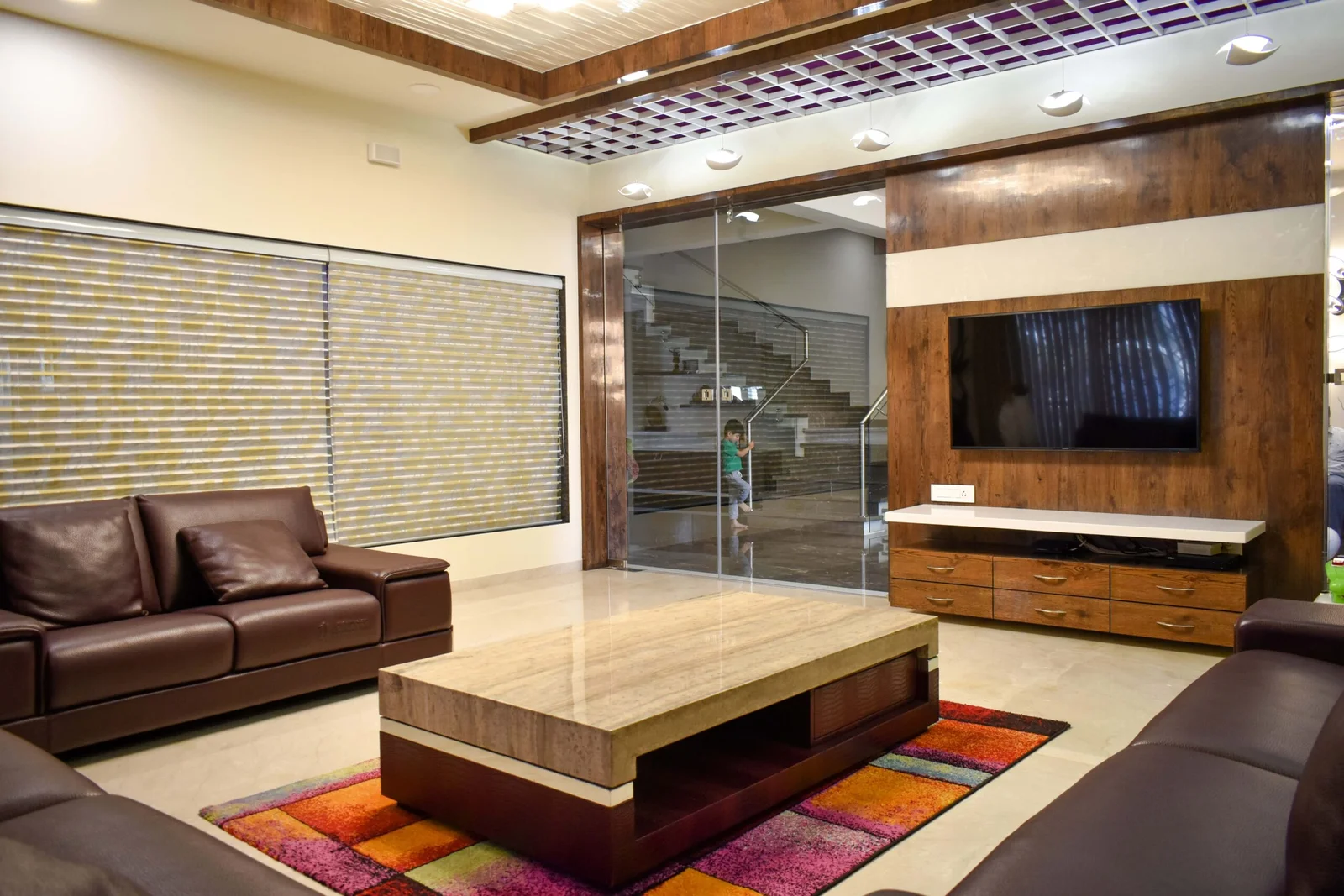
Type: Premium Residential
Key Decision: Large glazing was concentrated on the orientations that bring useful daylight without direct afternoon sun exposure, so the house feels open and light-filled without the thermal penalty that floor-to-ceiling west-facing glass typically creates in this climate.
Outcome: A built private residence in Ahmedabad where the comfort of the interior — light, ventilation, privacy — is the result of early orientation decisions, not air conditioning compensating for them.
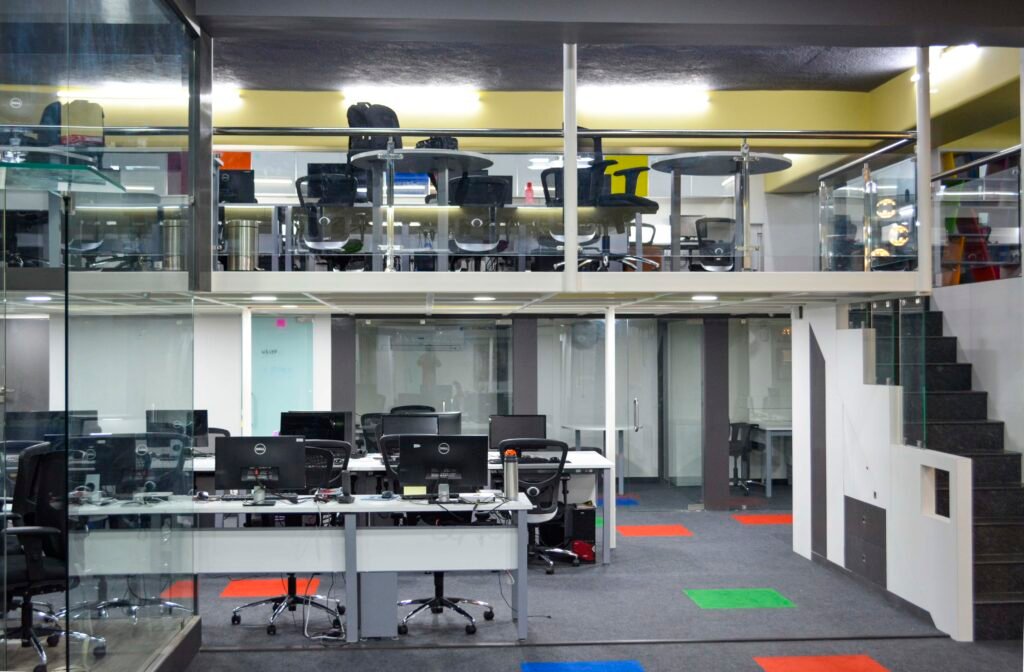
Type: Corporate / Commercial Office
Key Decision: The floor was zoned by activity intensity rather than by department — quiet focus areas separated from collaborative and breakout zones at the planning stage — so the energy of an open-plan office supports the work rather than disrupting it.
Outcome: A delivered office interior where the spatial logic matches how an IT team actually works across a day, not how a workplace looks in a photograph.
Key Decision: Treatment zones were acoustically and spatially separated by therapy type rather than grouped generically, so a patient in a quiet recovery bay is not adjacent to an active rehabilitation area — and staff can move between zones without crossing patient circulation paths.
Outcome: A delivered clinic interior in Ahmedabad where the spatial logic supports the clinical programme directly — reducing friction for staff and reducing anxiety for patients, which in a physiotherapy setting are the same design problem.
Frequently Asked Questions
Q: What's the difference between interior design and interior styling at VNA?
Q: When should we engage interior design — at architecture stage or after the building is built?
Q: Do you do residential, commercial, and institutional interiors equally?
Q: How do you charge — percentage of project cost or fixed fee?
Q: What do you need from us to start?
Q: Will you work with our existing architect or contractor?
Q: How long does the process take?
Q: Do you supply furniture or do we procure separately?
Q: What about Vastu — do you incorporate it?
Q: Do you handle MEP coordination directly?
Q: What makes VNA different from typical interior design firms in Gujarat?
A: VNA is an architectural practice with 24 years and 500+ completed projects across airports, iconic buildings, residential, commercial and mixed use high-rise, hospitals, university campuses, and residences — so we understand how buildings actually work, what fails in execution, and what holds up at year ten. That perspective shapes every interior decision we make.
Q: Do you work across Gujarat or only in Ahmedabad?
Q: Can interior design alone fix problems in a building that is not working?
Start with a use-and-coordination conversation
- Floor plan, shell drawings, or site details (whatever stage you are at)
- Reference images, mood boards, or examples — we will interrogate them, not just match them
- Timeline expectations
- Budget band — even a range is useful
- Any decisions already locked (architecture, contractor, vendors, services)
We reply in 48 hours with feasibility questions and a suggested next-step plan.
Or message us on WhatsApp